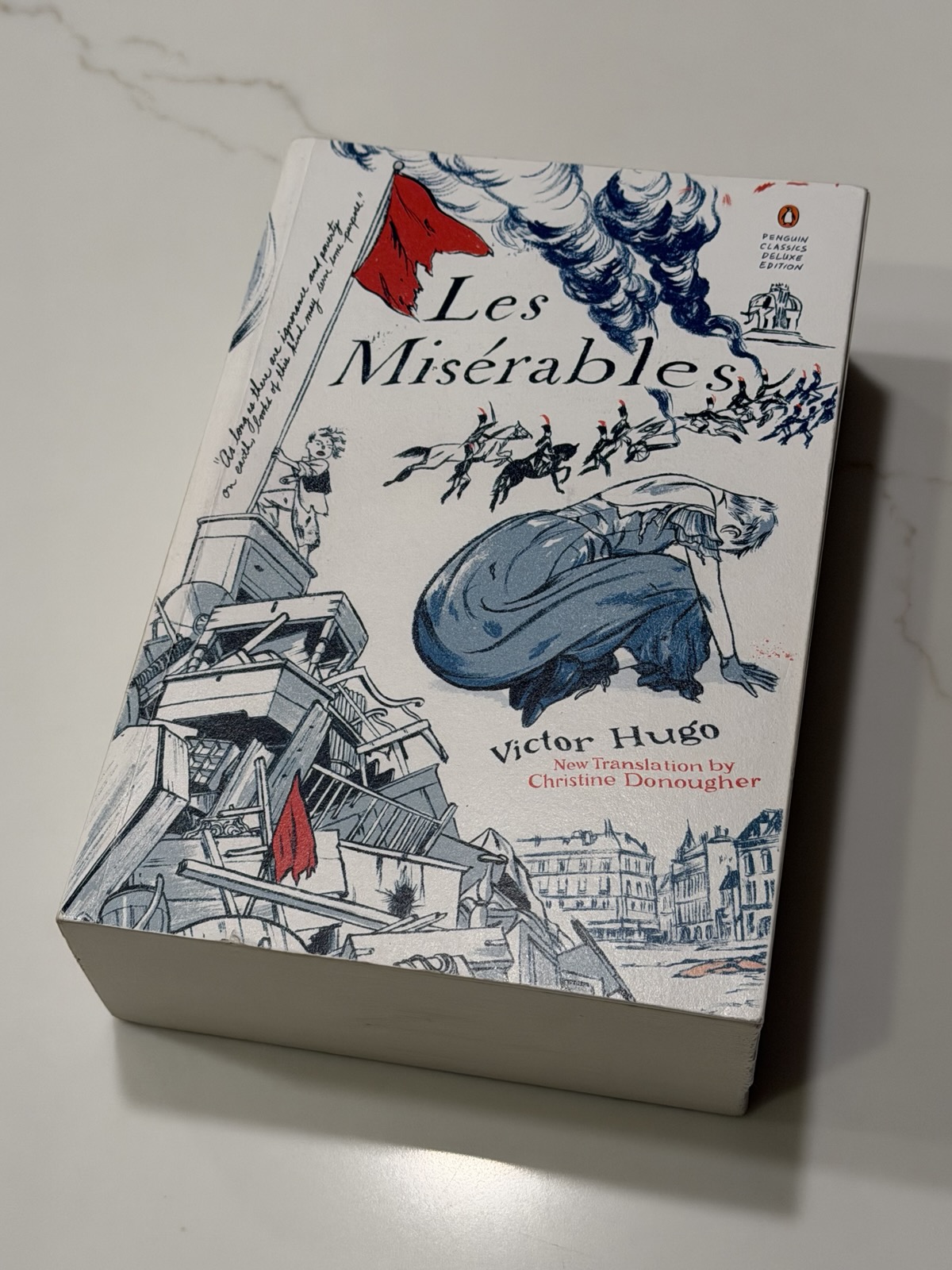
This book is 1304 pages long and took me over four months to read, and what a read. Like Moby Dick, it was Benjamin McEvoy who convinced me to read this very voluminous book. Against my better judgement, this 3.25 lb book traveled with me on a few trips. I really liked the translation by Christine Donougher as it was modern and easy to read with plenty of footnotes to understand the nuance of the intended meaning that can often be lost in translation.
This book is equal parts the story and an aesthetic. The book is heavy with exhaustive diversions into topics such as the Battle of Waterloo, a treatise on slang, and the history of the Paris sewers. Did Hugo lack a strong editorial presence in his work? Maybe, but these rabbit holes did help set the contextual weight of the story and I felt enriched.
Does human nature change so thoroughly and so radically? Can the human being created good by God be made wicked by man? Can the soul be completely remade by fate and, being ill-fated, become ill-natured? Can the heart grow deformed and develop incurable uglinesses and infirmities under the pressure of inordinate misfortune, like the spine under too low a vault?
After spending so much time with this work, I am still processing my overall impression. I have a fondness for the book and some of characters, though others I quite loath.